

$50,000 Salary After Tax in Kansas (2026 Guide)
URL Slug: /50k-salary-after-tax-kansas-2026
If you earn $50,000 a year in Kansas, understanding your true take‑home pay is essential. Whether you live in Wichita, Overland Park, Kansas City, or Topeka, state and federal taxes directly shape your monthly budget. This guide breaks down exactly how much you keep after taxes, explains Kansas’s progressive income tax system, and shows how far a $50K salary can go in the Sunflower State.
All calculations in this guide are based on our Kansas paycheck calculator using 2026 tax parameters. No guesses, no estimates—only verified figures. We used the same tool you can use to calculate your salary in Kansas and get a personalized breakdown in seconds.
Kansas stands out for its affordable cost of living, which makes a $50,000 salary feel stronger here than in many other states. Throughout this guide, we address whether $50K is a good salary in Kansas, how much hits your bank account each month, and what type of lifestyle you can expect in cities like Wichita or Overland Park.
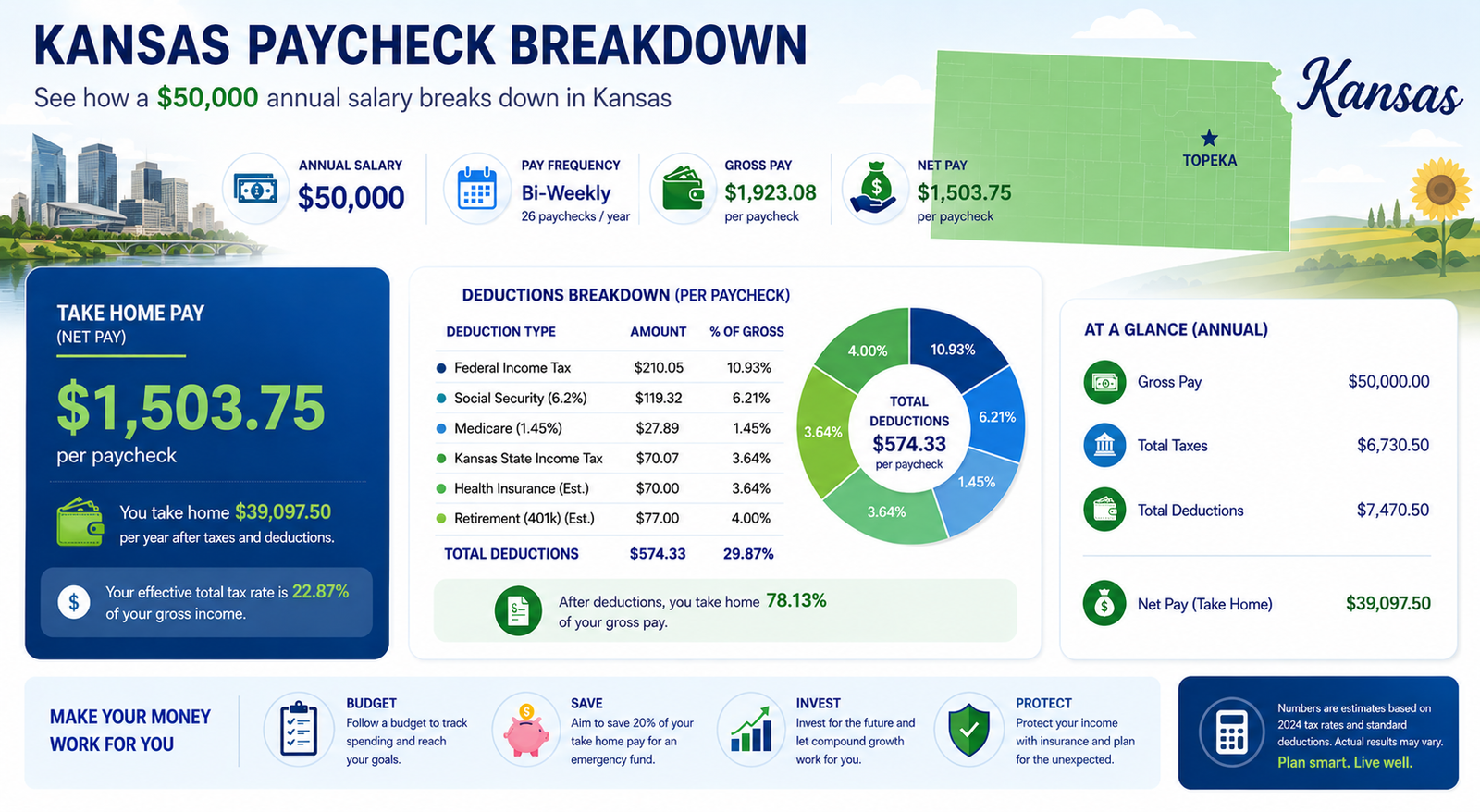
$50,000 salary after tax in Kansas is approximately $38,743 per year or $3,229 per month. This takes into account federal income tax, FICA (Social Security & Medicare), and Kansas state income tax for a single filer with no additional deductions. Your actual take‑home pay may vary based on personal circumstances.
Table of Contents
- Overview of $50,000 After Tax in Kansas
- Salary Breakdown Table
- Detailed Tax Breakdown
- Tax Breakdown Table & Pie Chart
- Kansas‑Adjusted Monthly Budget
- State Comparison: Kansas vs. Neighbors
- Net Pay Comparison Table & Bar Chart
- Is $50,000 a Good Salary in Kansas?
- 5 Tips to Increase Your Take‑Home Pay
- $50,000 Salary After Tax in Kansas – FAQs
- Understanding Your Take‑Home Pay
- Disclaimer
Overview of $50,000 After Tax in Kansas
Kansas uses a progressive state income tax structure with three brackets. Combined with federal taxes and FICA, your overall tax burden on a $50,000 salary is moderate compared to national averages. The state also offers a relatively low cost of living—housing in Wichita can be 20–30% cheaper than the U.S. average, while Overland Park sits closer to the median but still offers good value.
Because Kansas taxes are progressive, your effective state income tax rate remains low even as income rises. With a standard deduction and personal exemption, a single filer earning $50,000 faces a Kansas effective rate of just under 4.2%. This, plus federal taxes, results in the take‑home figure we show below.
Salary Breakdown Table
| Pay Frequency | Gross Pay | Net Pay (Take‑Home) |
|---|---|---|
| Annual | $50,000 | $38,743 |
| Monthly | $4,167 | $3,229 |
| Bi‑Weekly | $1,923 | $1,491 |
| Weekly | $962 | $745 |
| Hourly (40h/week) | $24.04 | $18.63 |
All figures are based on the paycheck calculator for Kansas and assume a single filer, standard deductions, and no pre‑tax contributions.
Detailed Tax Breakdown
On a $50,000 annual salary in Kansas, three main deductions come out of your paycheck:
- Federal Income Tax: $5,368 (effective rate ~10.7%)
- FICA (Social Security & Medicare): $3,825 (7.65% flat)
- Kansas State Income Tax: $2,065 (effective rate ~4.1%)
Total taxes: $11,257, leaving a net annual take‑home of $38,743.
Tax Breakdown Table & Visual Pie Chart
| Tax Component | Amount | Percentage of Gross |
|---|---|---|
| Federal Income Tax | $5,368 | 10.74% |
| FICA | $3,825 | 7.65% |
| Kansas State Tax | $2,065 | 4.13% |
| Total Tax | $11,257 | 22.51% |
| Take‑Home Pay | $38,743 | 77.49% |
Kansas‑Adjusted Monthly Budget on a $50,000 Salary
Is living comfortably on a $50K salary possible in Kansas? Absolutely. The city you choose makes a big difference. Wichita and Topeka offer very affordable rents, while Overland Park and parts of Kansas City lean slightly higher. Here is a realistic monthly budget for a single person living in a mid‑range Kansas city like Wichita.
| Expense Category | Amount | % of Net Pay |
|---|---|---|
| Rent (1‑bedroom) | $850 | 26.3% |
| Utilities & Internet | $150 | 4.6% |
| Groceries | $320 | 9.9% |
| Transportation | $220 | 6.8% |
| Healthcare (premiums + copays) | $180 | 5.6% |
| Insurance (renter/car) | $110 | 3.4% |
| Savings & Investments | $400 | 12.4% |
| Discretionary / Fun | $350 | 10.8% |
| Total Expenses | $2,580 | 79.9% |
| Remaining Surplus | $649 | 20.1% |
You can also explore FreeAiden for free AI‑powered tools including QR code generators, barcode generators, PDF converters, image utilities, and other productivity aids if you’re looking to streamline your personal finance record‑keeping.
Calculate your real take‑home pay in seconds
Try the Kansas Paycheck Calculator NowState Comparison: Kansas vs. Neighbors
Your net pay can shift significantly just by crossing a state line. Using the same $50,000 salary and federal tax assumptions, here’s how Kansas stacks up against Missouri, Oklahoma, and no‑income‑tax Texas. Figures are drawn from each state’s 2026 paycheck calculator on our platform.
| State | Annual Net Pay | Monthly Net Pay | Difference vs. Kansas |
|---|---|---|---|
| Texas | $40,808 | $3,401 | +$2,065 |
| Missouri | $39,127 | $3,261 | +$384 |
| Kansas | $38,743 | $3,229 | — |
| Oklahoma | $38,782 | $3,232 | +$39 |
Is $50,000 a Good Salary in Kansas?
Yes, a $50,000 salary is considered solid in Kansas. The state's overall cost of living is about 13% below the national average, with housing costs particularly low. In Wichita, a $50K income can support a comfortable lifestyle, including dining out, a decent one‑bedroom apartment, and still leave room for savings. Even in pricier areas like Overland Park or select Kansas City suburbs, it remains above the median household income for a single person.
Compared to higher‑cost states, your money simply goes further here. And with no local income taxes in Kansas cities, you keep more of what you earn. Many residents find that $50,000 allows them to save, invest, and enjoy a balanced quality of life without feeling stretched.
5 Tips to Increase Your Take‑Home Pay in Kansas
- Contribute to a 401(k) or Traditional IRA: Pre‑tax retirement contributions lower your taxable income, reducing both federal and Kansas state tax.
- Use a Health Savings Account (HSA): Triple tax‑advantaged—contributions are pre‑tax, growth is tax‑free, and withdrawals for medical expenses aren’t taxed.
- Itemize if it makes sense: If you own a home in Kansas, property taxes and mortgage interest may push your deductions above the standard deduction.
- Take advantage of education credits: Kansas offers deductions for 529 contributions, which can reduce state taxable income.
- Adjust withholding: Use the Kansas paycheck calculator to check if you’re over‑withholding and increase your monthly cash flow.
$50,000 Salary After Tax in Kansas – FAQs
How much is $50,000 a year after taxes in Kansas?
In 2026, a single filer earning $50,000 in Kansas takes home approximately $38,743 annually, or about $3,229 per month, after federal income tax, FICA, and Kansas state income tax are deducted.
Is 50k a good salary in Kansas?
Yes, $50,000 is a good salary in Kansas. Thanks to the state’s lower cost of living—especially housing in Wichita and Topeka—you can maintain a comfortable lifestyle, save money, and still have discretionary income left over each month.
What is the $50,000 salary after tax for Wichita, KS?
Wichita has no local income tax, so the net pay is the same as the statewide figure: roughly $38,743 per year or $3,229 monthly. The city’s affordable housing makes that amount stretch even further.
How does Kansas tax compare to Missouri for a $50,000 salary?
Missouri generally yields a slightly higher net pay on a $50,000 salary—about $384 more per year—due to its flat income tax structure and slightly different deductions. However, Kansas’s overall affordability often balances out the difference.
Can you live comfortably on $50k in Overland Park?
Yes, though Overland Park’s housing costs are higher than the Kansas average. With a net income of $3,229 per month, a single person can afford a nice apartment, cover expenses, and still save, especially if they budget carefully.
What is the hourly rate for a $50,000 salary in Kansas?
Based on a standard 2,080‑hour work year, a $50,000 salary equals about $24.04 per hour gross. After taxes, the hourly take‑home is around $18.63.
How can I reduce my tax liability on a $50,000 income in Kansas?
You can reduce taxable income by contributing to a 401(k) or IRA, using an HSA, claiming eligible itemized deductions, or contributing to a Kansas 529 education savings plan. Always verify strategies with a tax professional.
Does Kansas tax Social Security benefits?
No, Kansas does not tax Social Security benefits, regardless of your total income level. This makes retirement income planning more favorable for those who settle in the state.
Understanding Your Take‑Home Pay in Kansas
On a $50,000 salary after tax in Kansas, you keep around $38,743 per year. That’s a realistic, data‑backed number that accounts for federal, FICA, and the state’s progressive income tax. Kansas’s low cost of living, particularly in cities like Wichita and Topeka, means this income can support a fulfilling life with room for savings and enjoyment.
Of course, every financial situation is unique. The best way to see your exact numbers is to plug your details into the Kansas paycheck calculator. It takes less than a minute and shows you precisely what hits your bank account—no estimates, just clarity.
See exactly how much you keep after taxes
Go to the Free Kansas Paycheck CalculatorDisclaimer
Important: All tax figures in this article are estimates based on the 2026 Kansas paycheck calculator and current tax laws as understood at the time of writing. Your individual circumstances—such as filing status, pre‑tax deductions, dependents, or additional income—can change your take‑home pay. This content is for informational purposes only and does not constitute financial or tax advice. Always consult a qualified professional for personal tax planning.