

Tax Tips in USA: Your Complete Guide to Legal Tax Savings in 2026
Are you looking for proven ways to reduce your tax burden legally? Whether you're an employee, freelancer, small business owner, or retiree, understanding the best tax tips in USA can save you thousands of dollars each year. This comprehensive guide brings together the latest IRS tax tips and expert financial planning strategies to help you keep more of your hard-earned money.
With tax laws constantly evolving, staying informed about deductions, credits, and planning strategies is essential. This guide is based on IRS tax guidance and educational financial planning resources, providing you with accurate, actionable advice you can trust.
The best tax tips in the USA include maximizing retirement contributions, checking tax credits, adjusting withholding, tracking deductions, keeping organized records, and filing early. According to IRS guidance, proper tax planning throughout the year can help taxpayers reduce penalties, maximize refunds, and avoid costly mistakes.

Why Tax Planning Matters
Tax planning isn't just something you do in April—it's a year-round strategy that can significantly impact your financial well-being. When you understand how the tax system works and take proactive steps throughout the year, you position yourself to legally minimize your tax liability while maximizing your refunds.
The difference between reactive tax filing and strategic tax planning can amount to thousands of dollars. According to the IRS, millions of taxpayers leave money on the table each year simply because they don't file when they're not legally required to do so. Others miss out on valuable credits and deductions because they haven't kept proper records or don't understand what they qualify for.
Effective tax planning helps you avoid penalties, reduce stress during tax season, and make informed financial decisions. Whether you're adjusting your W-4 withholding, contributing to retirement accounts, or tracking business expenses, every action you take can have tax implications. By staying informed and organized, you transform tax time from a stressful obligation into an opportunity to optimize your finances.
Key Takeaway
Proactive tax planning throughout the year is far more effective than last-minute scrambling in April. The IRS recommends checking your withholding regularly and keeping organized records to make tax filing smoother and more beneficial.
Best Tax Tips in USA for Maximum Savings
Let's dive into the most effective tax-saving strategies that can help you reduce your tax burden legally. These tips are based on current IRS guidance and proven financial planning practices.
1. Maximize Your Retirement Contributions
One of the most powerful tax tips in USA is contributing to retirement accounts. For 2026, you can contribute up to $24,500 to a 401(k) plan, or $32,500 if you're age 50 or older thanks to catch-up contributions. Traditional IRA contributions are limited to $7,500 ($8,600 with catch-up for those 50+).
These contributions reduce your taxable income for the year, potentially lowering your tax bracket while building your retirement nest egg. Since many new tax deductions phase out as adjusted gross income (AGI) increases, pre-tax retirement contributions serve a dual purpose: they lower your current tax bill and preserve your eligibility for other deductions.
2026 Retirement Contribution Limits
2. Understand Standard vs. Itemized Deductions
The standard deduction has increased significantly for 2026. Married couples filing jointly can claim $32,200, while individuals can claim $16,100. These amounts adjust annually for inflation.
However, if you itemize, you may benefit from the dramatically increased state and local tax (SALT) deduction, which has risen from $10,000 to $40,000 for tax years 2025 through 2029. This additional $30,000 deduction phases down for those with adjusted gross income above $500,000 and terminates after $600,000.
If your SALT deductions for 2025 add up to less than $40,000, consider prepaying some of next year's state or local taxes to claim the full deduction. A tax professional can run the numbers to help you decide whether the standard deduction or itemizing works best for your situation.
3. Take Advantage of Tax Credits
Tax credits are even more valuable than deductions because they reduce your tax bill dollar-for-dollar. The Child Tax Credit, Earned Income Tax Credit, and education credits can provide substantial savings. Make sure you're claiming every credit you qualify for—this is one of the most important tax tips in USA for families and students.
4. Adjust Your Withholding
Even though the tax filing deadline has passed, it's not too early to start planning for the next year. The IRS recommends checking your withholding now to ensure you're having the right amount taken from your paycheck. Use the IRS Tax Withholding Estimator to determine if you need to adjust your W-4 form.
Having too much withheld means you're giving the government an interest-free loan, while having too little can result in penalties. The goal is to get as close to zero as possible—neither a large refund nor a large tax bill.
Pro Tip
Life events like marriage, divorce, having a child, or buying a home can significantly impact your tax situation. Review your withholding after any major life change to avoid surprises at tax time.
Tax Tips for Employees
As a W-2 employee, you might think there are limited tax-saving opportunities, but that's not true. Here are strategies specifically designed for employees.

Utilize Pre-Tax Benefits
Many employers offer pre-tax benefits that reduce your taxable income. Health Savings Accounts (HSAs) and Flexible Spending Accounts (FSAs) allow you to set aside money for medical expenses before taxes are taken out. For 2026, HSAs offer particularly attractive benefits—you can contribute pre-tax dollars, the money grows tax-free, and withdrawals for qualified medical expenses are also tax-free.
Unlike FSAs, which typically require you to use funds within the plan year (though some employers allow rollovers up to $660 in 2026), HSA funds roll over year after year. This makes HSAs a powerful triple-tax-advantaged tool for both current medical expenses and retirement healthcare costs.
Track Work-Related Expenses
While the Tax Cuts and Jobs Act suspended miscellaneous itemized deductions for employees, certain work-related expenses may still be deductible if you're in a specific category, such as performing artists, fee-basis state or local government officials, or reservists. Keep detailed records of any unreimbursed business expenses, as tax laws can change.
Maximize Employer Retirement Matching
If your employer offers a 401(k) match, contribute at least enough to get the full match—it's essentially free money. This not only boosts your retirement savings but also reduces your current taxable income. Even if you can't max out your contribution, prioritize getting the full employer match first.
Consider Commuter Benefits
Many employers offer pre-tax commuter benefits for parking and public transportation. These benefits reduce your taxable income while covering necessary work expenses. Check with your HR department to see what's available.
Tax Tips for Freelancers & Self-Employed Workers
Self-employment comes with unique tax considerations and opportunities. As a freelancer or independent contractor, you have access to deductions that W-2 employees don't, but you also face additional tax responsibilities.
Pay Quarterly Estimated Taxes
Unlike employees who have taxes withheld from each paycheck, self-employed individuals must pay estimated taxes quarterly. The IRS requires these payments if you expect to owe $1,000 or more in taxes when you file. Missing these deadlines can result in penalties, so set calendar reminders for April 15, June 15, September 15, and January 15.
Use our paycheck calculator to estimate your tax obligations and plan accordingly. Understanding your tax burden helps you set aside the right amount each month.
Deduct Business Expenses
Self-employed taxpayers can deduct ordinary and necessary business expenses, including:
- Home office deduction: If you use part of your home exclusively and regularly for business, you may qualify for this deduction based on square footage
- Equipment and supplies: Computers, software, office furniture, and supplies are deductible
- Internet and phone: The business portion of these expenses is deductible
- Professional services: Legal, accounting, and consulting fees
- Marketing and advertising: Website costs, business cards, and advertising expenses
- Travel and meals: Business travel is fully deductible, while business meals are generally 50% deductible
- Health insurance: Self-employed individuals can deduct 100% of health insurance premiums for themselves, their spouse, and dependents
Understand Self-Employment Tax
Self-employed individuals pay both the employer and employee portions of Social Security and Medicare taxes, totaling 15.3% on net earnings. However, you can deduct the employer-equivalent portion (7.65%) when calculating your adjusted gross income.
Keep Meticulous Records
The IRS expects self-employed taxpayers to maintain accurate records of income and expenses. Use accounting software, keep receipts, and separate business and personal finances by using dedicated business bank accounts and credit cards. Good record-keeping makes tax filing easier and protects you in case of an audit.
Important Reminder
The IRS offers various tools and resources for small business owners and entrepreneurs to manage tax responsibilities efficiently. During National Small Business Week and throughout the year, the IRS provides guidance to help business owners avoid scams and stay compliant.
Tax Credits and Deductions Most Americans Miss
Many taxpayers overlook valuable tax-saving opportunities simply because they're unaware they exist. Here are commonly missed credits and deductions that could put more money in your pocket.
Charitable Giving Strategies
If philanthropy is important to you, strategic timing can maximize your tax benefits. Consider these approaches:
- Donor-Advised Funds (DAFs): If you regularly give to charities and itemize, consider putting several years' worth of gifts into a DAF before the end of 2025. This gives you an immediate deduction while allowing you to spread out the giving over several years.
- New Standard Deduction Charitable Deduction: Starting in 2026, taxpayers using the standard deduction can claim up to $1,000 for individuals ($2,000 for married couples filing jointly) for cash gifts to public charities. This is a significant opportunity for those who don't itemize.
- Bunching Deductions: Itemizers must contribute at least 0.5% of their AGI before claiming charitable deductions starting in 2026. Consider accelerating gifts in 2025 before this floor kicks in.
Education-Related Benefits
Education expenses can provide substantial tax benefits:
- American Opportunity Credit: Up to $2,500 per eligible student for the first four years of higher education
- Lifetime Learning Credit: Up to $2,000 per tax return for qualified education expenses
- Student loan interest deduction: Up to $2,500 in student loan interest may be deductible
- 529 Plans: While contributions aren't federally deductible, earnings grow tax-free and withdrawals for qualified education expenses are tax-free. Starting in 2026, you can use up to $20,000 per year for K-12 expenses (increased from $10,000), covering tuition, books, digital tools, and testing fees.
Energy-Efficient Home Improvements
The IRS offers credits for making your home more energy-efficient, including solar panels, energy-efficient windows, doors, and HVAC systems. These credits can significantly offset the cost of upgrades while reducing your environmental footprint.
Child and Dependent Care Credit
If you pay for childcare so you can work or look for work, you may qualify for this credit. The amount depends on your income and qualifying expenses. Many parents miss this credit because they assume their income is too high, but phase-outs begin at relatively high income levels.
Tax-Saving Opportunities by Category
Retirement Tax Strategies for Long-Term Savings

Retirement planning and tax planning go hand in hand. Smart retirement strategies can reduce your current tax burden while securing your financial future.
Traditional vs. Roth: Which Is Right for You?
Traditional retirement accounts (401(k)s and traditional IRAs) offer tax-deductible contributions, reducing your taxable income now. You'll pay taxes on withdrawals in retirement. Roth accounts (Roth 401(k)s and Roth IRAs) use after-tax dollars, but qualified withdrawals in retirement are tax-free.
Consider a Roth conversion if your traditional IRA investments are temporarily down. You'll pay taxes on the converted amount, but future growth and qualified withdrawals will be tax-free. However, be aware that conversions increase your AGI, which could cause certain deductions to phase out.
Trump Accounts for Children
A new opportunity for 2026 is the "Trump Account," similar to traditional IRAs but designed for children under 18. Unlike traditional IRAs, these accounts don't require earned income. Annual contributions are limited to $5,000 (indexed starting in 2028), and children born from 2025 through 2028 are eligible for a $1,000 one-time "seed" contribution from the federal government.
Contributions can't be made until July 4, 2026, and distributions aren't permitted until January 1 of the calendar year in which your child turns 18. This gives your children a remarkable head start on retirement savings.
Health Savings Accounts as Retirement Tools
HSAs aren't just for current medical expenses—they're powerful retirement savings vehicles. After age 65, you can withdraw HSA funds for any purpose without penalty (though non-medical withdrawals are taxed as ordinary income). For medical expenses, withdrawals remain tax-free at any age.
Maximize your HSA contributions, pay current medical expenses out-of-pocket if possible, and let your HSA grow invested for decades. This creates a tax-free healthcare nest egg for retirement.
Small Business Tax Tips
Small business owners face unique tax challenges and opportunities. Here's how to navigate them effectively.
Choose the Right Business Structure
Your business structure—sole proprietorship, partnership, LLC, S corporation, or C corporation—affects your tax obligations. Each has advantages and disadvantages:
- Sole proprietorships and single-member LLCs: Simple to operate, but you pay self-employment tax on all net income
- S corporations: Can reduce self-employment tax by paying yourself a reasonable salary and taking additional profits as distributions
- C corporations: Subject to double taxation but offer more fringe benefit deductions
Consult with a tax professional to determine which structure minimizes your tax burden while meeting your business needs.
Qualified Business Income Deduction
Many pass-through business owners qualify for the Qualified Business Income (QBI) deduction, which allows you to deduct up to 20% of qualified business income. This deduction can provide substantial savings, though it phases out at higher income levels for certain service businesses.
Section 179 Deduction and Bonus Depreciation
Small businesses can immediately deduct the full purchase price of qualifying equipment and software purchased or financed during the tax year through Section 179. Bonus depreciation allows you to deduct a percentage of the cost of eligible business property in the first year it's placed in service.
Retirement Plans for Small Businesses
Small business owners have access to retirement plans with higher contribution limits than individual IRAs, including SEP IRAs, SIMPLE IRAs, and solo 401(k)s. These plans reduce your taxable income while building retirement savings.
IRS Resources for Small Businesses
Being a small business owner can be challenging. Fortunately, the IRS provides several tools and resources to help business owners and entrepreneurs manage their tax responsibilities efficiently. During National Small Business Week and throughout the year, the IRS highlights key topics and warns against scams targeting small businesses.
Common Tax Filing Mistakes to Avoid
Even well-intentioned taxpayers make mistakes that can delay refunds or trigger audits. Here are the most common errors and how to avoid them.
Mathematical Errors
Simple math mistakes can throw off your entire return. While tax software catches most calculation errors, double-check your work, especially if you're filing manually. Verify that numbers transferred correctly from forms to your return.
Incorrect or Missing Information
Errors in Social Security numbers, names, and filing status are among the most common mistakes. Ensure all information matches your Social Security card exactly. If you're married, verify you've selected the correct filing status—Married Filing Jointly, Married Filing Separately, or Head of Household (if qualifying).
Forgetting to Sign and Date
An unsigned tax return is invalid. For e-filed returns, you'll sign electronically. For paper returns, both spouses must sign if filing jointly. Missing signatures are a surprisingly common error that delays processing.
Not Reporting All Income
The IRS receives copies of all your W-2s, 1099s, and other income statements. Failing to report income—even small amounts from side gigs or freelance work—can trigger notices and penalties. Keep track of all income sources throughout the year.
Ignoring IRS Notices
If you receive a notice from the IRS, don't panic, but don't ignore it either. Most notices can be resolved by responding promptly. If you can't pay your tax debt in full, the IRS offers options including payment plans and offers in compromise for those experiencing financial hardship.
Missing Deadlines
Filing late results in penalties and interest. The penalty for filing late is typically 5% of unpaid taxes per month, up to 25%. If you can't file on time, submit Form 4868 for an automatic six-month extension, but remember that extensions extend the filing deadline, not the payment deadline.
Scam Alert
The IRS warns taxpayers about scams, especially during tax season. The IRS never initiates contact via email, text, or social media requesting personal or financial information. Never click on suspicious links or provide information to unsolicited callers claiming to be from the IRS.
IRS Tax Guidance & Filing Tips
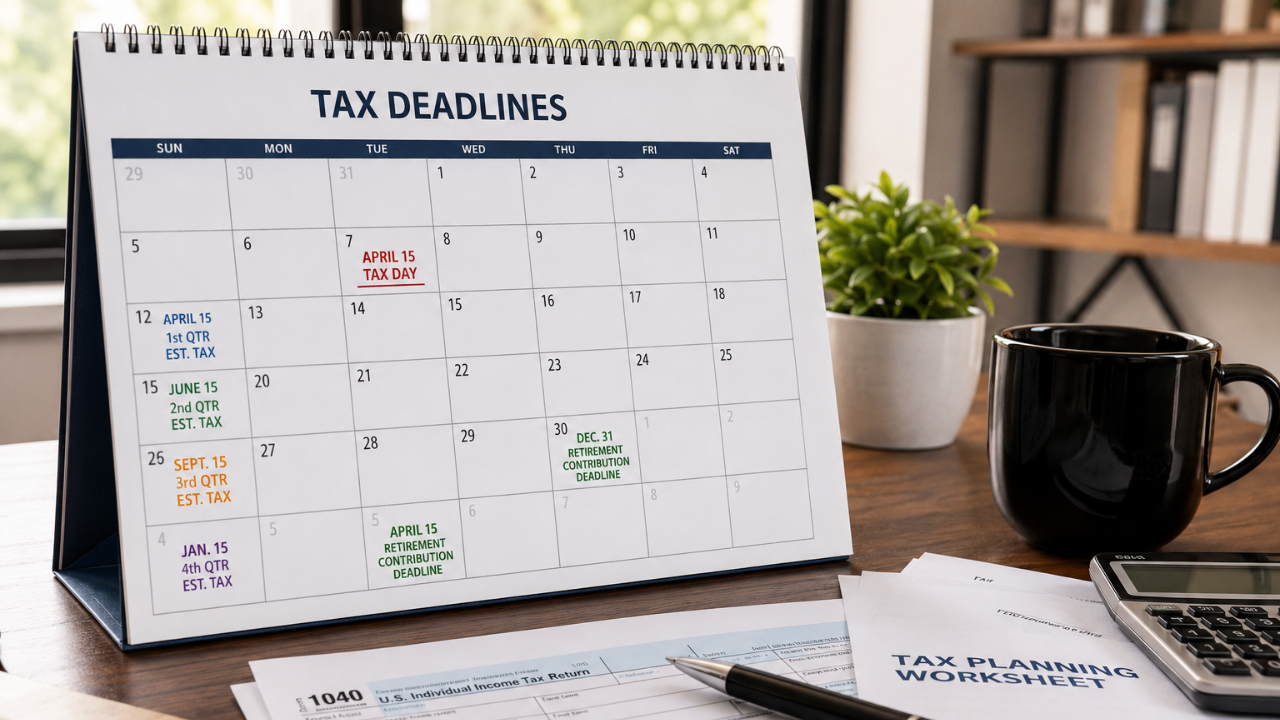
Staying informed about IRS guidance helps you file accurately and take advantage of all available benefits.
File Early to Protect Against Fraud
Filing your return as soon as you have all necessary documents protects you from tax identity theft. Fraudsters often file fake returns early in the season using stolen Social Security numbers to claim refunds. By filing first, you prevent criminals from successfully submitting a return in your name.
Choose Direct Deposit for Faster Refunds
The fastest way to receive your refund is through direct deposit. Most e-filed returns with direct deposit are processed within 21 days. Paper returns and paper checks take significantly longer.
Use IRS Free File if Eligible
If your adjusted gross income is $79,000 or less, you may qualify for IRS Free File, which provides free tax preparation and e-filing through IRS partners. This can save you hundreds of dollars in tax preparation fees.
Track Your Refund
Use the IRS "Where's My Refund?" tool to track your refund status. You can check as soon as 24 hours after e-filing or four weeks after mailing a paper return. The tool updates once daily, usually overnight.
Don't Leave Money on the Table
Not everyone is legally required to file a federal tax return. However, not filing could mean leaving money on the table. If you had taxes withheld or qualify for refundable credits like the Earned Income Tax Credit, you must file to receive your refund.
IRS Recommendation
According to the IRS, even if you're not required to file, you should do so if you're due a refund or qualify for tax credits. The IRS also emphasizes that it's never too early to start planning for next year's taxes by checking your withholding and making adjustments as needed.
Record Keeping Tips for Tax Success
Proper record keeping is the foundation of accurate tax filing and audit protection. Here's how to stay organized.
What Records to Keep
Maintain records that support income, deductions, and credits reported on your tax return. This includes:
- W-2s and 1099s showing income
- Receipts for deductible expenses
- Bank statements and canceled checks
- Proof of charitable contributions
- Records of home improvements (for basis calculations)
- Investment purchase and sale records
- Retirement contribution records
- Healthcare expense receipts
How Long to Keep Records
The IRS generally recommends keeping records for three years from the date you filed your original return or two years from the date you paid the tax, whichever is later. However, keep records longer in certain situations:
- Six years: If you underreported income by more than 25%
- Seven years: If you filed a claim for a loss from worthless securities or bad debt deduction
- Indefinitely: If you filed a fraudulent return or didn't file a return; keep property records as long as you own the asset plus three years after disposal
Digital vs. Paper Records
The IRS accepts electronic records as long as they're accurate and accessible. Scan paper receipts and store them in organized digital folders. Use cloud storage with backup to protect against data loss. Many apps can help you track expenses and categorize deductions throughout the year.
Organize Throughout the Year
Don't wait until tax season to organize your records. Set up a system that works for you—whether it's a filing cabinet with labeled folders or a digital system with cloud storage. Review and organize monthly to prevent year-end chaos.
For additional productivity tools, including document converters and organizational utilities, you might find resources at FreeAiden, which offers free AI-powered online tools.
Calculate Your Real Take-Home Pay
Understanding how taxes affect your paycheck is crucial for financial planning. See exactly how much you'll take home after federal, state, and local taxes.
Use Our Paycheck Calculator NowTax Tips in USA – FAQs
What are the best tax tips in the USA?
The best tax tips in USA include maximizing retirement account contributions, taking advantage of all eligible tax credits, adjusting your withholding appropriately, tracking deductions throughout the year, keeping organized records, and filing early to protect against fraud. Additionally, consider whether itemizing deductions makes sense with the increased SALT deduction limit of $40,000, or if the standard deduction of $32,200 for married couples ($16,100 for individuals) provides greater benefit. Strategic tax planning year-round, rather than just at filing time, produces the best results.
How can I legally reduce my taxes?
You can legally reduce taxes by contributing to pre-tax retirement accounts like 401(k)s and traditional IRAs, which lower your taxable income. Take advantage of Health Savings Accounts (HSAs) if you have a high-deductible health plan. Claim all eligible deductions and credits, including the Child Tax Credit, Earned Income Tax Credit, and education credits. If you itemize, maximize deductions for mortgage interest, charitable contributions, and state and local taxes. Self-employed individuals should deduct all legitimate business expenses. Consider tax-loss harvesting to offset investment gains, and use tax-advantaged accounts like 529 plans for education savings.
What deductions can employees claim?
Most employees claim the standard deduction ($16,100 for individuals, $32,200 for married couples in 2026). Itemizers can deduct mortgage interest, state and local taxes (up to $40,000), charitable contributions, and medical expenses exceeding 7.5% of AGI. While miscellaneous employee business expenses are suspended through 2025, certain categories like performing artists, fee-basis government officials, and reservists may still deduct unreimbursed work expenses. Employees should also maximize pre-tax benefits like 401(k) contributions, HSA contributions, and flexible spending accounts, which reduce taxable income.
What tax records should I keep?
Keep records that support income, deductions, and credits on your tax return, including W-2s, 1099s, receipts for deductible expenses, bank statements, canceled checks, charitable contribution records, investment purchase and sale documents, and retirement contribution records. The IRS generally recommends keeping records for three years from filing date or two years from payment date, whichever is later. Keep records for six years if you underreported income by more than 25%, seven years for worthless securities claims, and indefinitely if you filed fraudulently or didn't file. Maintain property records as long as you own the asset plus three years after disposal.
How can freelancers lower taxes?
Freelancers can lower taxes by deducting all legitimate business expenses, including home office costs, equipment, supplies, internet and phone (business portion), professional services, marketing, travel, and meals (50%). Pay quarterly estimated taxes to avoid penalties. Contribute to retirement accounts like SEP IRAs or solo 401(k)s with higher limits than traditional IRAs. Deduct 100% of health insurance premiums for yourself, spouse, and dependents. Track mileage for business travel. Consider forming an S corporation to reduce self-employment tax on distributions. Keep meticulous records and separate business and personal finances with dedicated accounts.
Does contributing to retirement reduce taxable income?
Yes, contributions to traditional 401(k) plans and traditional IRAs reduce your taxable income for the year you make the contribution. For 2026, you can contribute up to $24,500 to a 401(k) ($32,500 if age 50 or older) and $7,500 to an IRA ($8,600 if 50+). These pre-tax contributions lower your adjusted gross income, potentially reducing your tax bracket and preserving eligibility for other deductions that phase out at higher income levels. Roth contributions don't reduce current taxable income, but qualified withdrawals in retirement are tax-free. HSA contributions are also tax-deductible and offer triple tax advantages.
What happens if I miss the tax deadline?
If you miss the tax deadline, file as soon as possible to minimize penalties. The failure-to-file penalty is typically 5% of unpaid taxes per month, up to 25%. The failure-to-pay penalty is 0.5% per month, up to 25%. Interest accrues on unpaid taxes. If you can't file on time, submit Form 4868 for an automatic six-month extension, which extends the filing deadline but not the payment deadline. If you can't pay in full, the IRS offers payment plans and, for those experiencing hardship, offers in compromise. Don't ignore the problem—penalties and interest continue to accumulate, and the IRS can take collection actions.
How do I avoid IRS penalties?
Avoid IRS penalties by filing on time, even if you can't pay in full. Pay estimated taxes quarterly if you're self-employed or have significant income not subject to withholding. Adjust your W-4 withholding to ensure enough tax is withheld from your paycheck. Keep accurate records to support deductions and credits. Report all income, including side gigs and freelance work. Respond promptly to IRS notices. If you can't pay, contact the IRS immediately to set up a payment plan rather than ignoring the debt. Use tax software or a qualified tax professional to minimize errors. File for an extension if you need more time, but remember extensions don't extend the payment deadline.
Are tax preparation fees deductible?
For most individual taxpayers, tax preparation fees are no longer deductible. The Tax Cuts and Jobs Act suspended miscellaneous itemized deductions subject to the 2% floor from 2018 through 2025, which included tax preparation fees. However, self-employed individuals can deduct tax preparation fees as a business expense on Schedule C. If you own rental property, you can deduct tax preparation fees allocated to rental income on Schedule E. Starting in 2026, these deductions may change depending on legislation, so consult a tax professional for current guidance.
What is the IRS Tax Withholding Estimator?
The IRS Tax Withholding Estimator is a free online tool that helps you determine the correct amount of tax to have withheld from your paycheck. By entering information about your income, filing status, deductions, and credits, the estimator calculates your recommended withholding adjustments. Using this tool helps you avoid having too much withheld (giving the government an interest-free loan) or too little (risking penalties). The IRS recommends checking your withholding after major life events like marriage, divorce, having a child, or buying a home, and at least annually to ensure accuracy.
Disclaimer
Important Notice: This article is for educational and informational purposes only and does not constitute professional tax, legal, or financial advice. Tax laws are complex and subject to change. The information provided is based on IRS guidance and financial planning resources available as of 2026, but individual tax situations vary significantly.
Before making any tax-related decisions, you should consult with a qualified tax professional, CPA, or financial advisor who can provide personalized advice based on your specific circumstances. The IRS recommends reviewing official IRS publications and guidance directly at www.irs.gov for the most current and accurate information.
The authors and publishers of this content are not responsible for any errors, omissions, or damages arising from the use of this information. Tax laws change frequently, and what applies to one taxpayer may not apply to another. Always verify current tax laws and regulations with official sources or qualified professionals.
Understanding Smart Tax Planning

Mastering tax tips in USA doesn't require becoming a tax expert overnight. It's about understanding the fundamentals, staying organized, and taking proactive steps throughout the year. The strategies outlined in this guide—from maximizing retirement contributions to tracking deductions, from claiming overlooked credits to avoiding common mistakes—can collectively save you thousands of dollars.
Remember that tax planning is a year-round activity, not just an April exercise. Check your withholding regularly, keep organized records, contribute consistently to retirement accounts, and stay informed about tax law changes. When you take control of your tax situation, you transform tax time from a source of stress into an opportunity to optimize your finances.
The most successful taxpayers are those who plan ahead, seek professional advice when needed, and use available tools to their advantage. Whether you're an employee, freelancer, small business owner, or retiree, implementing these tax tips in USA can help you legally reduce your tax burden and keep more of your hard-earned money.
Ready to See How Taxes Affect Your Paycheck?
Use our comprehensive calculator to understand your exact take-home pay after all taxes and deductions.
Calculate Your Take-Home Pay Now