

Form 1040-ES: What It Is and How to Pay Estimated Taxes
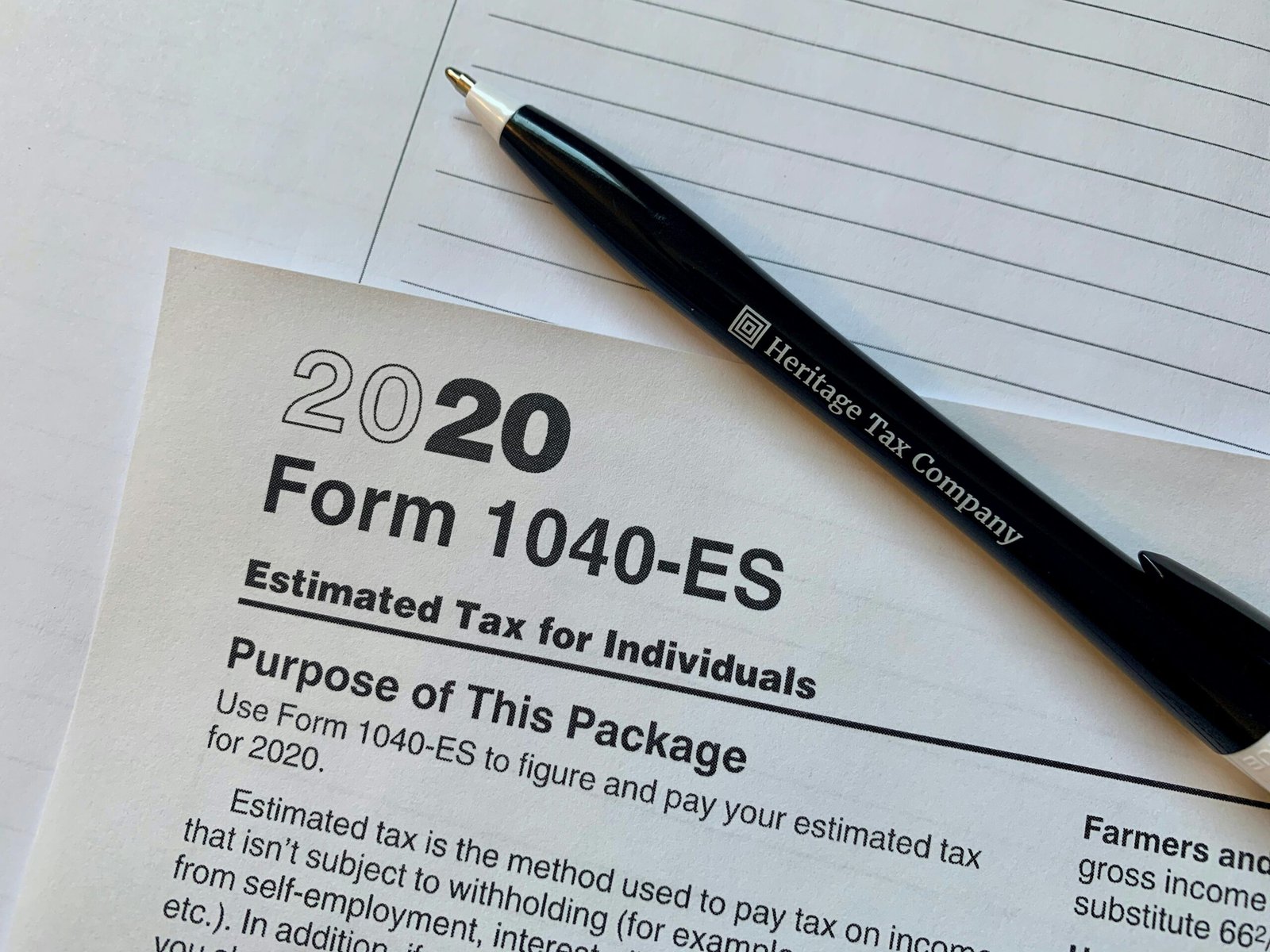
A self-employed taxpayer reviewing IRS Form 1040-ES and calculating quarterly estimated taxes.
If you earn income that does not have taxes withheld automatically, you may need to make estimated tax payments during the year. Form 1040-ES: What It Is and How to Pay Estimated Taxes is a topic that confuses many taxpayers, but understanding it can save you from costly penalties. The IRS designed Form 1040-ES to help people with self-employment income, investment earnings, rental profits, and other non-wage income pay their fair share throughout the year, rather than facing a large bill at tax time.
This guide walks you through every part of the process. You will learn who needs to file, how to calculate what you owe, when payments are due, and how to submit them securely. All information comes directly from official IRS Form 1040-ES instructions and related tax publications.
This guide is based on official IRS Form 1040-ES instructions and educational tax resources. Always verify details with the IRS website before making payments.
Table of Contents
- What Is Form 1040-ES?
- Who Must Pay Estimated Taxes?
- When Are Estimated Tax Payments Due?
- Why the IRS Requires Estimated Tax Payments
- How to Calculate Your Estimated Taxes
- How to Complete Form 1040-ES Step-by-Step
- Understanding the Payment Vouchers
- How Self-Employment Taxes Affect Estimated Payments
- Income That Usually Requires Estimated Taxes
- Form 1040-ES vs Form 1040
- IRS Underpayment Penalties and Safe Harbor Rules
- How to Pay Estimated Taxes Online
- Paying by Check or Money Order
- Common Form 1040-ES Mistakes
- Estimated Taxes for Freelancers, Contractors, and Small Businesses
- FAQs
What Is Form 1040-ES?
Form 1040-ES is the official IRS document titled "Estimated Tax for Individuals." It serves two main purposes. First, it contains a detailed worksheet that helps you estimate how much tax you will owe for the current year. Second, it provides payment vouchers you can use to mail your quarterly estimated tax payments to the IRS.
Many people think taxes are only due once a year. That is true for employees whose employers withhold taxes from each paycheck. But for anyone with income outside of traditional employment, the IRS expects payments throughout the year. Form 1040-ES is the tool that makes this possible.
According to IRS guidance, the U.S. tax system operates on a pay-as-you-go basis. This means taxes should be paid as income is earned. Form 1040-ES helps taxpayers meet this requirement without needing to wait for the annual filing deadline.
The form itself consists of several parts: an estimated tax worksheet, a payment voucher section, and a record of estimated tax payments. You do not file the worksheet with the IRS. You keep it for your records. Only the payment vouchers get mailed in with your checks or money orders. If you pay electronically, you may never need the paper vouchers at all.
Download the official Form 1040-ES
Review IRS instructions before making estimated tax payments.
Download Form 1040-ES (PDF)Who Must Pay Estimated Taxes?
The IRS generally requires estimated tax payments from individuals who expect to owe at least $1,000 in tax after subtracting withholding and refundable credits. This rule applies to a wide range of taxpayers.
You likely need to make estimated tax payments if you are in any of these situations:
- Self-employed individuals running their own business or freelance practice
- Gig economy workers earning through platforms like rideshare apps, delivery services, or online marketplaces
- Independent contractors receiving 1099-NEC forms instead of W-2s
- Investors with significant dividend, interest, or capital gain income
- Landlords earning rental income from properties
- Retirees with pension or annuity income where withholding is insufficient
- People with multiple income streams where not all sources withhold taxes
If you are an employee who also has a side business, your W-2 withholding might not cover the additional tax you owe on your side earnings. In that case, you may need to either adjust your W-4 withholding or start making estimated payments.
When Are Estimated Tax Payments Due?
Estimated tax payments follow a quarterly schedule. The IRS divides the year into four payment periods, and each has a specific due date. Missing these deadlines can trigger penalties, so marking your calendar is essential.
When a due date falls on a weekend or federal holiday, the deadline shifts to the next business day. The IRS announces any such adjustments each year. For 2026, these are the standard dates, but always confirm with the IRS website as the year progresses.
Why the IRS Requires Estimated Tax Payments
The pay-as-you-go system exists for a straightforward reason. The federal government funds its operations throughout the year, not in one lump sum after April 15. Income tax revenue supports everything from national defense to infrastructure to social programs. When taxpayers pay throughout the year, the government maintains stable cash flow.
For employees, this system works automatically through payroll withholding. Employers deduct federal income tax, Social Security tax, and Medicare tax from every paycheck and send those amounts to the IRS. The employee never touches that money. For self-employed individuals and others with non-wage income, no such automatic system exists. Estimated tax payments fill that gap.
Think of estimated taxes as the self-employed version of payroll withholding. You are simply doing for yourself what an employer would do for you if you were on their payroll.
How to Calculate Your Estimated Taxes
Calculating estimated taxes can feel intimidating the first time, but the process follows a logical sequence. The IRS includes a worksheet with Form 1040-ES that guides you through each step.
Add up all expected income from self-employment, wages, investments, rentals, and any other sources. Use prior-year figures as a baseline and adjust for changes you anticipate.
Deduct items like IRA contributions, student loan interest, and the deductible portion of self-employment tax. This gives you your adjusted gross income (AGI).
For 2026, the standard deduction amounts are expected to be slightly higher due to inflation. Use the appropriate amount based on your filing status. Note: The IRS has not yet released the official 2026 standard deduction amounts. Check the IRS website for updates.
Use the current year tax brackets to compute your estimated income tax.
Self-employment tax covers Social Security and Medicare and is calculated at approximately 15.3% of net self-employment earnings.
Account for any tax credits you qualify for and any withholding from W-2 wages or pension payments.
If your income fluctuates significantly throughout the year, you can use the annualized income installment method. This approach calculates each quarter's payment based on actual income earned during that specific period. It takes more effort but can prevent overpayment during slow months. For more details, refer to Form 2210 Instructions.
How to Complete Form 1040-ES Step-by-Step
The Form 1040-ES package includes a worksheet and four payment vouchers. Here is how to work through it:
The Estimated Tax Worksheet
Start with the worksheet on page 3 of the Form 1040-ES PDF. Enter your expected income, adjustments, deductions, and credits line by line. The worksheet mirrors the structure of Form 1040, so the logic should feel familiar if you have filed a tax return before.
Be honest with your estimates. Underestimating your income to reduce quarterly payments will backfire when the IRS assesses an underpayment penalty. Overestimating means you give the government an interest-free loan. Aim for accuracy based on what you reasonably expect.
The Payment Vouchers
Once you know your quarterly amount, fill out one voucher for each payment period. Each voucher asks for your name, address, Social Security number, and the payment amount. If you are married filing jointly, include both spouses' information.
The vouchers are pre-labeled with the due date for each quarter. Use the correct voucher for the correct period so the IRS credits your account properly.
Understanding the Payment Vouchers
Each voucher in Form 1040-ES is a detachable slip that accompanies your payment. Voucher 1 corresponds to the April deadline, Voucher 2 to June, Voucher 3 to September, and Voucher 4 to January of the following year.
When you mail a voucher with a check or money order, the IRS uses the information on the voucher to apply your payment to the correct tax year and quarter. Write your Social Security number and the tax year on your check. Do not send cash through the mail.
If you pay electronically through IRS Direct Pay or EFTPS, you do not need to mail the paper vouchers. The electronic system captures all the necessary information digitally.
| Voucher | Due Date (2026) | Covers Income From |
|---|---|---|
| Voucher 1 | April 15, 2026 | Jan 1 – Mar 31, 2026 |
| Voucher 2 | June 15, 2026 | Apr 1 – May 31, 2026 |
| Voucher 3 | September 15, 2026 | Jun 1 – Aug 31, 2026 |
| Voucher 4 | January 15, 2027 | Sep 1 – Dec 31, 2026 |
How Self-Employment Taxes Affect Estimated Payments
Self-employment tax is one of the biggest surprises for new freelancers and business owners. When you work for an employer, the company pays half of your Social Security and Medicare taxes. When you work for yourself, you pay both halves. That total comes to approximately 15.3% of your net self-employment earnings.
This self-employment tax gets added on top of your regular income tax. For someone in the 22% income tax bracket, the combined rate can approach 37% or more. That is why estimated tax calculations must include self-employment tax. Overlooking it leads to a significant shortfall.
You can deduct half of your self-employment tax when calculating your adjusted gross income. This deduction partially offsets the burden, but you still need to include the full self-employment tax amount in your estimated payment calculation.
Income That Usually Requires Estimated Taxes
Several types of income rarely have taxes withheld, making estimated payments necessary:
Self-Employment and Freelance Income
Money earned as an independent contractor, sole proprietor, or freelancer is reported on Form 1099-NEC. No taxes are withheld from these payments. You are responsible for both income tax and self-employment tax on this money.
Gig Economy Earnings
Rideshare driving, food delivery, task-based apps, and online selling platforms generate taxable income. These platforms may issue a 1099-K if you exceed certain thresholds, but even without a form, the income is still taxable.
Investment Income
Dividends from stocks, interest from savings accounts and bonds, and capital gains from selling assets all create tax obligations. While you can sometimes opt for backup withholding on investment accounts, most investment income arrives untaxed.
Rental Income
Profits from renting out residential or commercial property are taxable. After deducting expenses like mortgage interest, repairs, and depreciation, the net rental income adds to your tax bill.
Side Business Earnings
A part-time business run alongside a regular job generates income that usually has no withholding. Even small amounts can push your total tax due above the $1,000 threshold, especially when combined with your regular salary.
Form 1040-ES vs Form 1040
Form 1040-ES and Form 1040 serve different roles in the tax system. Form 1040 is the annual tax return you file each spring. It reports your actual income, deductions, and credits for the previous year and determines your final tax bill or refund.
Form 1040-ES is a planning and payment tool used during the year. It helps you prepay your expected tax liability so that when you file Form 1040, you have already covered most or all of what you owe. Think of Form 1040-ES as the "during the year" form and Form 1040 as the "after the year" form.
When you file your annual Form 1040, you report all estimated tax payments you made. The IRS subtracts those payments from your total tax. If you paid too much, you get a refund. If you paid too little, you pay the balance, possibly with an underpayment penalty.
IRS Underpayment Penalties and Safe Harbor Rules
The IRS charges a penalty when taxpayers significantly underpay their estimated taxes. This penalty is essentially interest on the amount that should have been paid earlier. It accrues from each missed quarterly deadline until the balance is paid.
Fortunately, the IRS provides safe harbor rules that protect you from penalties if you meet certain payment thresholds. You generally avoid the penalty if:
- You owe less than $1,000 in tax after subtracting withholding and credits, or
- You paid at least 90% of the tax for the current year, or
- You paid at least 100% of the tax shown on your prior year return (110% if your prior year adjusted gross income exceeded $150,000)
The safe harbor based on last year's tax is particularly useful for people whose income grows significantly. By paying 100% (or 110%) of last year's tax in equal quarterly installments, you avoid penalties even if your current year tax ends up much higher.
How to Pay Estimated Taxes Online
The IRS offers several electronic payment methods. These are faster, more secure, and more reliable than mailing checks. You receive immediate confirmation of your payment, which eliminates worries about lost mail or delayed processing.
IRS Direct Pay
IRS Direct Pay is the simplest option for most individuals. You visit the IRS website, enter your tax information, and authorize a transfer from your bank account. There is no fee, and you can schedule payments in advance. You do not need to create an account. Visit IRS Direct Pay to get started.
Electronic Federal Tax Payment System (EFTPS)
EFTPS is a more robust system designed for frequent users and businesses. It requires enrollment and identity verification, which takes about a week by mail. Once enrolled, you can schedule all four quarterly payments at once, view your payment history, and manage your federal tax payments in one place. Learn more at EFTPS.gov.
IRS2Go Mobile App
The IRS2Go app lets you make payments from your phone. It connects to IRS Direct Pay and supports debit card payments through an approved third-party processor. Download it from your device's app store.
Credit or Debit Card Payments
The IRS also accepts credit and debit card payments through approved third-party processors. However, these processors charge a convenience fee, typically around 1.87% to 1.98% of the payment amount. Consider whether the convenience is worth the added cost.
Paying by Check or Money Order
If you prefer to pay by mail, use the payment vouchers included with Form 1040-ES. Fill out the correct voucher for the quarter, attach your check or money order payable to "United States Treasury," and mail it to the address listed in the Form 1040-ES instructions.
Write your Social Security number, the tax year, and "Form 1040-ES" on the memo line of your check. This helps the IRS apply your payment correctly if the voucher gets separated from the payment. Do not staple the check to the voucher. Use a paper clip or place both in the envelope loose.
Mail your payment at least a few days before the deadline. The IRS considers a payment timely if it is postmarked by the due date, but allowing extra time reduces stress and the risk of postal delays.
Common Form 1040-ES Mistakes
Even careful taxpayers make errors with estimated taxes. Here are the most frequent mistakes and how to avoid them:
Forgetting to Include Self-Employment Tax
Many first-time freelancers calculate only their income tax and forget the 15.3% self-employment tax. This can cause a shortfall of thousands of dollars. Always add self-employment tax to your estimated payment calculation.
Missing a Quarterly Deadline
Life gets busy, and a quarterly deadline slips past. Set calendar reminders for all four dates at the start of the year. Consider scheduling all payments in advance through EFTPS.
Using the Wrong Voucher or Payment Period
Mailing Voucher 2 for the first quarter payment creates confusion in your IRS account. Always match the voucher number to the correct payment period.
Underestimating Income Significantly
A reasonable estimate is fine. A deliberately low estimate to reduce payments triggers penalties. Use your prior-year income as a starting point and adjust for known changes.
Not Keeping Records of Payments
Save every confirmation number, bank statement, and payment receipt. When you file your annual return, you need to report the exact total of your estimated payments. Missing a payment in your records means leaving money unclaimed on your return.
Estimated Taxes for Freelancers, Contractors, and Small Businesses
Freelancers and independent contractors face a unique challenge. Their income often varies from month to month, making it hard to project annual earnings. One approach is to set aside a fixed percentage of every payment received, such as 25% to 30%, in a separate savings account. Then use those funds to cover quarterly estimated tax payments.
For small business owners operating as sole proprietors, single-member LLCs, or partnerships, estimated taxes cover both income tax and self-employment tax. If your business has employees, you also have separate payroll tax deposit obligations. Estimated taxes are for your personal tax liability, not your business payroll taxes.
If your business is structured as an S-corporation and you pay yourself a salary, your payroll withholding may cover much of your tax obligation. But any additional profit distributions still flow through to your personal return and may require estimated payments.
Some freelancers use a salary after taxes calculator to understand what their take-home pay would be as an employee and then reverse-engineer their estimated tax needs. This helps build intuition about how much to set aside from each client payment. You can also explore free tools at freeaiden.com for additional planning support.
Form 1040-ES: What It Is and How to Pay Estimated Taxes – FAQs
Managing Your Estimated Tax Payments With Confidence
Estimated tax payments do not need to be stressful. With a clear understanding of Form 1040-ES and the quarterly payment system, you can stay ahead of your tax obligations and avoid surprises. The key is building a simple routine.
Mark the four payment deadlines on your calendar at the start of each year. Set aside a percentage of every self-employment or non-wage income payment you receive into a dedicated tax savings account. When a quarterly deadline approaches, you will have the funds ready. Use IRS Direct Pay or EFTPS to submit your payment in minutes and save the confirmation for your records.
If your income is unpredictable, check in with your estimated tax worksheet mid-year. Adjust your remaining payments up or down based on how the year is actually going. The annualized income method is available if you need to match payments more precisely to your cash flow.
Remember that estimated taxes are not an extra tax. They are simply the method for paying what you owe on income where no employer withholds for you. Every dollar you pay through estimated taxes reduces your balance due when you file your annual return. The more accurately you estimate, the smoother your tax filing experience will be.