

IRS Form 4868: What It Is and How to File a Tax Extension
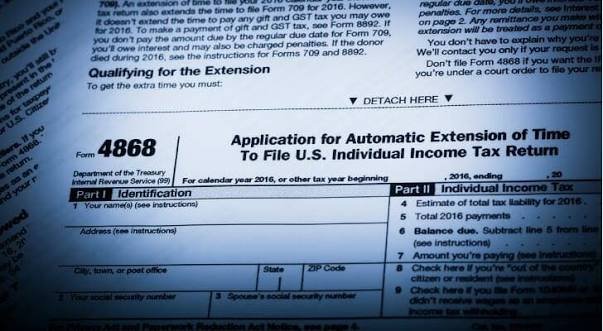
IRS Form 4868 used to request an automatic extension of time to file an individual income tax return for the 2025 tax year.
Filing your tax return on time is one of the most important financial responsibilities you carry each year. But life does not always cooperate with the April deadline. Whether you are missing key documents, dealing with a family emergency, or simply need more time to prepare an accurate return, IRS Form 4868 exists precisely for that purpose. This guide explains exactly what Form 4868 is, who should file it, how the automatic extension works, and what you must do to stay on the right side of IRS rules. Every piece of information here is drawn from official IRS instructions and educational tax resources, updated for the 2025 tax year (filed in 2026).
Table of Contents
- What Is IRS Form 4868?
- Who Needs to File Form 4868?
- What Does a Tax Extension Actually Extend?
- Form 4868 Filing Deadlines
- How to Fill Out IRS Form 4868 Step-by-Step
- Line-by-Line Form 4868 Instructions
- How to Estimate Your Tax Payment
- Filing Extension vs Payment Extension
- IRS Penalties and Interest Explained
- How to File Form 4868 Online
- How to Mail Form 4868
- Special Rules for Taxpayers Living Abroad
- What If You Miss the April 15 Deadline?
- Common Form 4868 Mistakes
- What Happens After Your Extension Is Approved?
- FAQs
What Is IRS Form 4868?
IRS Form 4868 is formally titled "Application for Automatic Extension of Time To File U.S. Individual Income Tax Return." When you submit this form correctly and on time, the IRS grants you an automatic six-month extension to file your federal income tax return. There is no approval process to wait for, and you will not receive a confirmation letter. The extension is granted automatically upon submission, as long as the form is filed by the regular due date of your return—typically April 15.
The form is used by individual taxpayers filing Form 1040, 1040-SR, 1040-NR, and several other individual return types. According to IRS guidance, the extension moves your filing deadline to October 15, 2026 for most calendar-year filers for the 2025 tax year. This extra time can be a financial lifesaver, but it comes with an important condition: it does not extend your time to pay any tax you owe.
Who Needs to File Form 4868?
You should consider filing Form 4868 if any of the following situations apply to your 2025 tax preparation (filed in 2026):
- You are missing one or more important tax documents such as a W-2, 1099, or K-1 that will not arrive before the deadline.
- You experienced a major life event—marriage, divorce, birth of a child, or death in the family—that complicated your tax picture.
- You need additional time to itemize deductions accurately or to gather records for self-employment income and expenses.
- You want your tax preparer to have more time to review your return carefully, reducing the risk of errors.
- You are living abroad and need to coordinate U.S. filing requirements with foreign tax obligations.
- You are in a federally declared disaster area and may qualify for additional automatic extensions.
- You simply feel rushed and want to file a more accurate, complete return rather than rushing to meet the April deadline.
Filing Form 4868 is not an admission of any problem. Millions of taxpayers use it every year. It is a practical tool built into the tax system precisely because the IRS recognizes that gathering complete and accurate tax information can take more time than the standard filing window allows.
What Does a Tax Extension Actually Extend?
This is the most misunderstood part of the extension process. Form 4868 extends only your deadline to file the paperwork. It does not give you more time to pay. Think of it this way: the IRS separates your filing obligation from your payment obligation. The extension addresses the first one exclusively.
If you owe tax for the year, that money is legally due by the original filing deadline—April 15, 2026, for most people. When you file Form 4868, you are expected to estimate the amount you owe and pay it when you submit the extension request. Paying at least 90% of your actual tax liability by the original deadline is the safest way to avoid penalties. If you wait until October to both file and pay, you will almost certainly face late payment penalties and interest charges on the unpaid balance from April 15 onward.
Form 4868 Filing Deadlines
The deadline to submit Form 4868 is the same as the regular filing deadline for your tax return. For the 2025 tax year (filed in 2026), here are the key dates:
| Taxpayer Type | Original Filing Deadline | Extended Deadline with Form 4868 |
|---|---|---|
| Most individual taxpayers | April 15, 2026 | October 15, 2026 |
| U.S. citizens living abroad | June 15, 2026 (automatic) | October 15, 2026 |
| Military in combat zones | Varies (extended automatically) | Extension period varies |
| Fiscal-year filers | 15th day of 4th month after year-end | 6 months after original deadline |
| Taxpayers in federally declared disaster areas | Varies (automatic) | Varies (check IRS Disaster Relief) |
If April 15 falls on a weekend or federal holiday, the deadline shifts to the next business day. For 2026, April 15 is a Wednesday, so the standard deadline holds. Mark your calendar and aim to file your extension at least a few days before the deadline to avoid last-minute technical issues or mail delays.
How to Fill Out IRS Form 4868 Step-by-Step
Form 4868 is a straightforward one-page document, but each section matters. Below is a walkthrough of the form's structure so you can complete it with confidence.
Line-by-Line Form 4868 Instructions
Here is exactly what each part of the official Form 4868 asks for, based on the current IRS Form 4868 PDF and its accompanying instructions.
Part I — Identification
Enter your full legal name, current mailing address, and Social Security number. If you are filing a joint return, include your spouse's name and SSN. The address you provide should be where you can receive mail through October. If you moved recently, use the address that will be valid when your return is eventually filed.
Line 1 — Estimate of Total Tax Liability
This is your best estimate of the total tax you will owe for the year. Include income tax, self-employment tax, and any other taxes reported on your Form 1040. Do not subtract withholding or estimated payments here. This is the gross tax figure before credits and payments.
Line 2 — Total Payments and Credits
Enter the sum of all federal income tax withheld from your paychecks, any estimated tax payments you made during the year, and refundable credits you expect to claim. Check your final pay stub of the year or your W-2 for withholding totals.
Line 3 — Balance Due
Subtract Line 2 from Line 1. If the result is zero or negative, you owe nothing and simply need the extension to file. If the result is positive, this is the amount you should pay with your extension to minimize or avoid penalties and interest.
Line 4 — Amount You Are Paying
Enter the amount you are sending with the extension. This can be the full balance due from Line 3, a partial payment, or zero if you cannot pay anything now. Paying as much as possible reduces future penalties and interest.
Part II — Out of the Country and Other Information
Check the box if you are a U.S. citizen or resident who was living outside the United States and Puerto Rico on the regular due date of your return. Also check if you need an additional extension beyond the automatic six months for certain rare circumstances, though this is uncommon for most filers.
How to Estimate Your Tax Payment
Estimating your tax liability does not require perfection, but it should be a reasonable and good-faith effort. The IRS understands that estimates are not exact. Here is a practical approach:
Start with your prior year's tax return. Look at the total tax line. Adjust for any major changes—a new job with different income, a side business that grew, investment gains or losses, or changes in deductions. If your income is similar to last year, your tax will likely be similar too. If you use tax software, many programs have an extension estimator tool built in. You can also use a paycheck calculator to review your year-to-date withholding and compare it against your expected tax liability.
Filing Extension vs Payment Extension
This distinction is so critical it deserves its own section. The IRS draws a bright line between filing and paying:
| Aspect | Filing Extension (Form 4868) | Payment Extension |
|---|---|---|
| What it does | Gives you until October 15 to file your return | Not available through Form 4868 |
| Payment deadline | Still April 15 for any tax owed | IRS offers payment plans separately |
| Penalty risk | No late filing penalty if extension is filed | Late payment penalty applies from April 15 |
| Interest | Interest still accrues on unpaid tax from April 15 | Interest accrues until balance is paid |
If you need more time to pay, the IRS offers installment agreements and short-term payment plans. These are separate from Form 4868 and require a different application process. You can request a payment plan online through the IRS website after your return is filed. Fees may apply (e.g., $31–$225 for long-term plans).
IRS Penalties and Interest Explained
Understanding the cost of paying late helps you make informed decisions. Here is what the IRS charges when tax goes unpaid past the original deadline, even if you have a valid filing extension:
Late Filing Penalty
The late filing penalty is 5% of the unpaid tax per month, up to a maximum of 25%. This penalty applies if you fail to file your return by the deadline (or extended deadline if Form 4868 is filed). Filing the extension eliminates this penalty entirely, as long as you file your return by the extended October deadline. That alone makes Form 4868 worth submitting.
Late Payment Penalty
The late payment penalty is 0.5% of the unpaid tax per month, also capped at 25%. This penalty begins accruing on April 15, even if you filed an extension. The only way to avoid it is to pay at least 90% of your actual tax liability by the original deadline.
Interest Charges
The IRS charges interest on any unpaid tax from the original due date until the balance is paid in full. The interest rate is determined quarterly and compounds daily. As of Q3 2026, the interest rate is 8% (federal short-term rate of 5% + 3%). Interest applies regardless of whether you filed an extension.
How to File Form 4868 Online
Filing electronically is the fastest and most reliable method. The IRS offers several free and paid options:
- IRS Free File: Taxpayers with income below $79,000 (2026 threshold) can use free tax software to file an extension at no cost through the IRS Free File program. This is available on the IRS website during tax season.
- IRS Direct Pay: You can make a payment and simultaneously receive an extension without filing Form 4868 at all. Select "extension" as the reason for payment, and the IRS automatically processes an extension for you. This is one of the simplest methods available.
- Commercial Tax Software: Most popular tax preparation software includes an option to e-file Form 4868. TurboTax, H&R Block, TaxAct, and similar platforms all support electronic extension filing.
- IRS E-File for Extension: Through the Modernized e-File system, tax professionals can submit Form 4868 electronically on behalf of clients.
When you e-file, you receive an electronic acknowledgment that the IRS accepted your extension. Keep this confirmation for your records. It serves as proof that you met the deadline.
How to Mail Form 4868
If you prefer paper filing, download Form 4868 from the IRS website, complete it, and mail it to the appropriate address. The mailing address depends on where you live and whether you are including a payment:
| Your State | Mailing Address (With Payment) | Mailing Address (Without Payment) |
|---|---|---|
| Alabama, Florida, Georgia, and others | IRS, P.O. Box 931300, Louisville, KY 40293-1300 | Department of the Treasury, IRS, Ogden, UT 84201-0045 |
| California, Hawaii, and others | IRS, P.O. Box 931300, Louisville, KY 40293-1300 | Department of the Treasury, IRS, Ogden, UT 84201-0045 |
Check the official Form 4868 instructions for the exact address based on your state of residence. If you mail the form, the envelope must be postmarked by the April 15, 2026, deadline. Use certified mail or a delivery service with tracking if you want proof of timely mailing. The IRS considers a form filed on time if it is postmarked by the due date, even if it arrives later.
Download IRS Form 4868
Get the official PDF directly from the IRS website. Review the official IRS instructions before filing your extension request.
Download IRS Form 4868 (PDF)Special Rules for Taxpayers Living Abroad
U.S. citizens and resident aliens who live and work outside the United States and Puerto Rico receive special treatment under IRS rules. If you are living abroad on the regular due date of your return, you automatically receive a two-month extension to June 15, 2026, without needing to file Form 4868. This automatic extension applies to both filing and payment for qualifying taxpayers, which is a notable difference from the standard rule.
If you need additional time beyond June 15, you can file Form 4868 to extend your filing deadline further to October 15, 2026. When completing the form, check the box in Part II indicating you were out of the country. Attach a statement to your return explaining that you qualified for the overseas extension. Even with this extended timeline, interest may still apply on any tax unpaid after the original April 15 deadline, though the late payment penalty may be waived if you meet the foreign residency criteria.
What If You Miss the April 15 Deadline?
If you miss the April 15, 2026, deadline for filing Form 4868, the late filing penalty begins accruing immediately. Here’s what you should do:
- File as soon as possible: The late filing penalty is 5% per month (capped at 25%), so filing even a few days late can significantly reduce your penalty.
- Pay as much as you can: The late payment penalty is 0.5% per month (capped at 25%). Paying as much as possible reduces the balance subject to penalties and interest.
- Request penalty relief: If you have a reasonable cause (e.g., natural disaster, serious illness), you can request penalty relief using Form 843.
- Check for disaster relief: If you are in a federally declared disaster area, you may qualify for automatic extensions and penalty relief.
Remember, the IRS considers your return filed on time if it is postmarked by the deadline. If you are mailing your return or extension, use certified mail or a delivery service with tracking to prove timely filing.
Common Form 4868 Mistakes to Avoid
Filing an extension is simple, but small errors can cause big problems. Here are the most frequent mistakes taxpayers make and how to avoid each one:
- Mistake: Assuming the extension covers the payment deadline. Reality: It does not. Pay what you can by April 15, 2026.
- Mistake: Not filing Form 4868 at all because you cannot pay. Reality: File the extension anyway. The late filing penalty (5% per month) is much harsher than the late payment penalty (0.5% per month).
- Mistake: Entering an incorrect Social Security number. Reality: Double-check both your SSN and your spouse's SSN before submitting.
- Mistake: Using an outdated address. Reality: The IRS will send correspondence to the address on the form. Use a current one.
- Mistake: Waiting until the last minute and encountering website outages or postal delays. Reality: File at least a few days early.
- Mistake: Forgetting to sign a paper form. Reality: An unsigned form is invalid and will be rejected.
- Mistake: Not keeping a copy of the submitted extension for your records. Reality: Save the confirmation or a photocopy.
What Happens After Your Extension Is Approved?
Because the extension is automatic, there is no formal approval notice. You simply receive the additional time to file. Your new deadline is October 15, 2026. You should receive an acknowledgment if you filed electronically. If you mailed the form, the absence of any rejection notice generally means the extension was processed.
Between April and October, gather your documents, prepare your return carefully, and double-check all entries. Filing an accurate return is far better than rushing and making errors that could trigger an audit or delay a refund. If you overpaid with your extension, the excess will be refunded when you file. If you underpaid, you will see the remaining balance due plus any accrued penalties and interest when you complete the return.
This guide is based on official IRS Form 4868 instructions and educational tax resources. For the most current information, always visit IRS.gov directly.
Estimate Your Paycheck After Taxes
Knowing your take-home pay helps you plan for tax season. Use a paycheck calculator to see how much is withheld and anticipate your tax liability before the deadline.
Calculate Your Take-Home PayIRS Form 4868: What It Is and How to File a Tax Extension – FAQs
Is Form 4868 automatically approved?
Yes. The IRS grants an automatic six-month extension to anyone who files Form 4868 correctly by the original due date of their return. You will not receive a confirmation letter unless you e-file and get an electronic acknowledgment.
Can I file Form 4868 after the April deadline?
No. Form 4868 must be submitted on or before the regular due date of your return, typically April 15. If you miss that deadline, the extension is not available, and late filing penalties may apply immediately. However, you should still file your return as soon as possible to minimize penalties.
Do I need to file a state tax extension separately?
Yes. Form 4868 covers only your federal income tax return. Most states have their own extension forms and deadlines. For example, California uses Form FTB 3519, and New York uses Form IT-370. Check with your state's department of revenue for specific requirements.
What if I cannot pay anything with my extension?
File Form 4868 anyway. The late filing penalty is 5% per month, while the late payment penalty is only 0.5% per month. Filing the extension saves you from the much larger penalty while you work out a payment arrangement with the IRS. You can also request a payment plan.
Can I get a second extension beyond October 15?
Generally, no. The six-month extension is the maximum for most individual taxpayers. In very rare circumstances involving severe hardship or living abroad, additional time may be available, but this requires a separate written request and IRS approval.
Does filing Form 4868 increase my audit risk?
No. Filing an extension does not raise any red flags with the IRS. Millions of taxpayers file extensions each year for legitimate reasons. The IRS does not use extension filings as a criterion for selecting returns for audit.
How do I make a payment with my extension online?
Use IRS Direct Pay. Select "extension" as the reason for payment, choose the tax year (2025), and enter your payment amount. The IRS automatically processes your extension when you make a payment designated for an extension. No separate Form 4868 is needed in this case.
What is the 2026 deadline for Form 4868?
For most taxpayers, Form 4868 is due by April 15, 2026. If you file on time, your extended filing deadline becomes October 15, 2026. Taxpayers living abroad have an automatic extension to June 15, 2026, and can use Form 4868 to extend further to October 15, 2026.
Can I use Form 4868 for business tax returns?
No. Form 4868 is for individual income tax returns only. Sole proprietors (filing Schedule C with Form 1040) can use Form 4868. Businesses (e.g., partnerships, corporations, LLCs) must use Form 7004 for most business returns. Check the IRS website for the correct extension form for your entity type.
Is there a penalty for overestimating my tax on Form 4868?
No penalty exists for overestimating. If you pay more than you end up owing, the excess is refunded when you file your return. Overpaying slightly is a safer strategy than underpaying and incurring penalties and interest on the shortfall. Note that overpayments do not earn interest from the IRS.
How do I check if my extension was accepted?
The IRS does not provide a tool to check extension status. However, if you e-filed, you should have received an electronic acknowledgment. If you mailed your form, the absence of a rejection notice generally means it was processed. You can also check your IRS account for payment history or call the IRS at 1-800-829-1040.
Before You Submit IRS Form 4868
Take a few practical steps right now to make sure your extension filing goes smoothly. First, gather your year-end pay stubs or last year's tax return so you have a reference point for estimating your tax. Second, decide whether you will file online or by mail—online is faster and gives you instant confirmation. Third, make any payment you can afford through IRS Direct Pay to reduce future penalties. Fourth, mark your new October deadline on your calendar and set a reminder for early October so you do not miss it. Finally, if you use a tax professional, communicate with them early about your extension and your estimated tax situation.
Filing an extension is not a failure of planning. It is a responsible choice when you need more time to get your taxes right. The IRS built Form 4868 into the system for exactly this reason. Use it wisely, pay what you can by the original deadline, and file your complete return well before October 15, 2026.
Plan Smarter for Tax Season
Use a salary after taxes calculator to understand your withholding and estimate your tax liability throughout the year. Being informed helps you avoid surprises at filing time.
Estimate Your Paycheck After TaxesFor additional free online tools, visit free online resources that may assist with tax estimation and financial planning.