

Last Updated: June 18, 2026
Individual Income Tax Forms: Complete Guide to IRS Forms for Individual Taxpayers (2026)
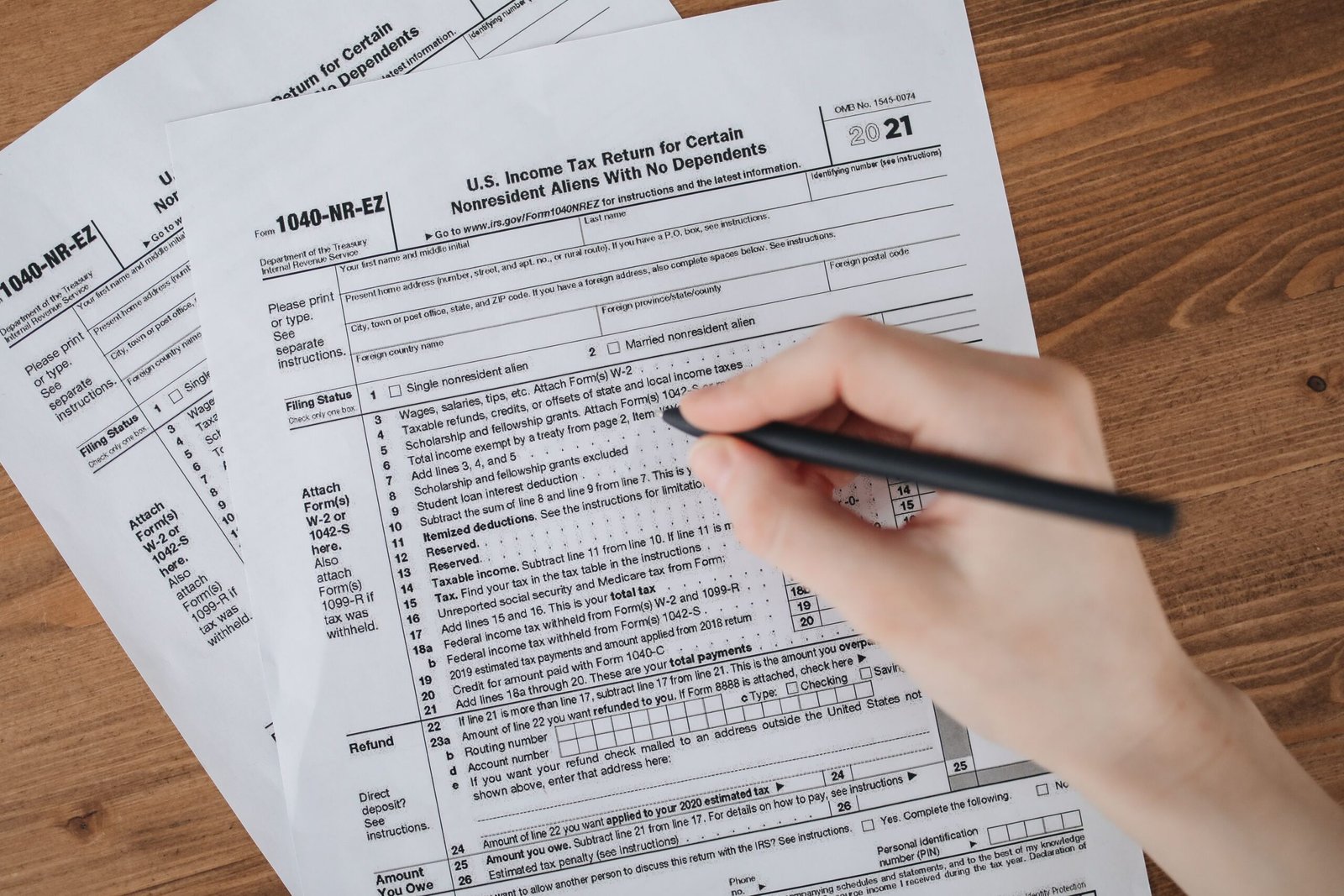
Navigating the paperwork behind your federal taxes can feel overwhelming, especially when you're not sure which IRS form to use. Every year, millions of individual taxpayers — employees, freelancers, retirees, and nonresidents — interact with a handful of core IRS documents. Understanding these individual income tax forms is the first step toward accurate filing, avoiding penalties, and keeping more of your money. Whether you're filing a simple return, amending a prior year, paying estimated taxes, or just verifying your wage information, this comprehensive IRS forms guide has you covered.
Table of Contents
What Are Individual Income Tax Forms?
The Internal Revenue Service (IRS) maintains a large library of forms, but only a handful affect the typical individual taxpayer. These forms serve different purposes: filing annual returns, reporting wages, adjusting withholdings, making payments, requesting more time, or fixing mistakes. The IRS designs each form for a specific situation. For example, U.S. citizens and resident aliens generally file Form 1040, while nonresident aliens use Form 1040-NR. Seniors have the option of a simplified 1040-SR. Understanding which form applies to you keeps your tax records accurate and avoids processing delays.
All these IRS individual tax forms are part of a connected system. Your employer reports wages on a W-2, which you then use to complete your 1040. If you're an independent contractor, you'll likely receive a 1099-NEC and may need to pay estimated taxes using 1040-ES. If you discover an error after filing, Form 1040-X becomes your go-to document. This interconnectedness is why taxpayers benefit from a bird’s-eye view of the most important personal tax forms.
Overview of Essential Individual Tax Forms
| Form | Purpose | Who Uses It | Filing Deadline | Download |
|---|---|---|---|---|
| 1040 | U.S. Individual Income Tax Return | Most U.S. citizens and resident aliens | April 15, 2027 (or next business day) | Form |
| 1040-SR | Tax Return for Seniors | Taxpayers aged 65 or older | April 15, 2027 | Form |
| 1040-NR | Nonresident Alien Tax Return | Nonresident aliens with U.S. income | April 15, 2027 (or June 15, 2027, if no U.S. wages) | Form |
| 1040-X | Amended Return | Anyone correcting a previously filed return | Within 3 years of original filing, or 2 years after tax payment | Form |
| 1040-ES | Estimated Tax Payment Voucher | Self-employed, gig workers, investors | Quarterly: April 15, June 15, September 15, January 15, 2027 | Form |
| 4868 | Extension of Time to File | Taxpayers needing more time to file | April 15, 2027 | Form |
| W-4 | Employee's Withholding Certificate | Employees updating paycheck withholding | No deadline; submit when job starts or life changes | Form |
| W-2 | Wage and Tax Statement | Employers report wages; employees use for filing | Employers must furnish by January 31, 2027 | Form |
| W-9 | Taxpayer Identification Number Request | Independent contractors, freelancers | Before receiving non-employee income | Form |
| 4506-T | Request for Transcript of Tax Return | Anyone needing past tax return data | No deadline; use anytime | Form |
Form 1040 – U.S. Individual Income Tax Return
What Form 1040 Is
Form 1040 is the standard federal income tax return for individuals. It's where you report all taxable income—wages, interest, dividends, business profits, and capital gains—and calculate the tax you owe or the refund you can expect. Most tax credits and deductions, including the standard deduction, child tax credit, and education credits, are claimed directly on this form.
Who Uses It
Any U.S. citizen or resident alien with income above the filing threshold uses Form 1040. Even if your income is below the threshold, you may want to file to claim refundable credits or receive a tax refund.
Why It Matters
The 1040 is the foundation of individual tax compliance. Errors here can lead to an IRS notice, delayed refunds, or even audits. According to IRS guidance, using the correct filing status and reporting all income accurately are the two biggest factors in a trouble-free return.
Filing Deadline
Usually April 15. For the 2026 tax year, the filing deadline is April 15, 2027 (unless extended by IRS announcement). Electronic filing is strongly encouraged; most refunds are issued within 21 days when you e-file and choose direct deposit.
Common Mistakes
- Forgetting to sign the return (if paper-filing).
- Math errors in income or deduction totals.
- Entering incorrect Social Security numbers.
- Choosing the wrong filing status.
Before finalizing, consider using a paycheck calculator to verify your year-to-date withholdings against your W-2. This simple check often catches discrepancies early.
Download from IRS: Form 1040 (PDF)
For a step-by-step walkthrough, see our Complete Form 1040 Guide.
Form 1040-SR – U.S. Tax Return for Seniors
What Form 1040-SR Is
Form 1040-SR is a version of the 1040 designed for taxpayers aged 65 and older. It features larger print, a standard deduction chart right on the form, and a simplified layout that still captures all the same income, deductions, and credits as the regular 1040.
Who Uses It
You can use Form 1040-SR if you are 65 or older by the end of the tax year. There is no income ceiling; senior taxpayers with any income level, including those with retirement distributions, Social Security benefits, and investment income, are eligible. For joint returns, both spouses must be 65 or older to use Form 1040-SR.
Why It Matters
The readability improvements reduce data entry errors. Additionally, the form includes a quick reference for the additional standard deduction for seniors, which can lower taxable income significantly.
Filing Deadline
Same as Form 1040: April 15, 2027. Seniors can e-file Form 1040-SR just as easily as the standard 1040.
Common Mistakes
- Assuming they must use 1040-SR if older; it's optional.
- Missing the higher standard deduction available for seniors.
- Not coordinating with retirement account required minimum distributions (RMDs).
Download from IRS: Form 1040-SR (PDF)
For a detailed look, read our Complete Form 1040-SR Guide.
Form 1040-NR – U.S. Nonresident Alien Income Tax Return
What Form 1040-NR Is
Form 1040-NR is the tax return for individuals who are neither U.S. citizens nor resident aliens for tax purposes but have U.S.-sourced income. It applies to nonresident aliens engaged in a trade or business in the U.S., or those with income from U.S. investments subject to withholding.
Who Uses It
Nonresident alien students, scholars, temporary workers, and foreign investors who receive effectively connected income or fixed, determinable, annual, or periodical (FDAP) income.
Why It Matters
Nonresident aliens are taxed differently: they generally cannot claim the standard deduction and are limited in the credits they can take. Filing the correct form prevents double taxation and ensures treaty benefits are applied properly.
Filing Deadline
Generally April 15, 2027, if you had wages subject to withholding. If you did not receive wages, the deadline is June 15, 2027. However, if you have U.S. trade or business income, the deadline remains April 15, 2027.
Common Mistakes
- Using the standard 1040 instead of 1040-NR.
- Claiming the standard deduction (only allowed for certain students and business apprentices from India).
- Omitting foreign address or ITIN details.
Download from IRS: Form 1040-NR (PDF)
For full guidance, visit our Complete Form 1040-NR Guide.
Form 1040-X – Amended U.S. Individual Income Tax Return
What Form 1040-X Is
Form 1040-X is used to correct errors or omissions on a previously filed Form 1040, 1040-SR, or 1040-NR. You might amend a return to claim a missed deduction, report additional income, change your filing status, or correct dependents. As of 2026, amended returns for tax years 2019 and later can be e-filed.
Who Uses It
Any individual taxpayer who discovers a mistake after their original return has been accepted by the IRS.
Why It Matters
An amended return can increase your refund or reduce the amount you owe. However, it must be filed within the statute of limitations: typically three years from the date you filed the original return, or two years from the date you paid the tax, whichever is later.
Filing Deadline
There’s no single deadline, but to claim a refund, the 1040-X must be submitted within the three-year/two-year window.
Common Mistakes
- Forgetting to attach supporting schedules for the changes.
- Not explaining the reason for the change in Part III.
- Filing a 1040-X for a math error the IRS would have corrected automatically.
Download from IRS: Form 1040-X (PDF)
For step-by-step amendment help, see our Complete Form 1040-X Guide.
Form 1040-ES – Estimated Tax for Individuals
What Form 1040-ES Is
Form 1040-ES is not a tax return but a payment voucher. It’s used by individuals who expect to owe at least $1,000 in tax beyond their withholding to send quarterly estimated payments to the IRS. The form includes a worksheet to calculate the amount due.
Who Uses It
Self-employed individuals, independent contractors, gig workers, investors, and retirees with significant untaxed income (such as interest or rental income) often need to pay estimated taxes.
Why It Matters
Paying estimated taxes on time prevents underpayment penalties. The IRS requires pay-as-you-go compliance, and quarterly vouchers are the mechanism for those without sufficient employer withholding. The IRS encourages using Direct Pay or the Electronic Federal Tax Payment System (EFTPS) to eliminate the need for mailing vouchers.
Filing Deadline
The four due dates for the 2026 tax year are April 15, 2026, June 15, 2026, September 15, 2026, and January 15, 2027. If a date falls on a weekend or holiday, it shifts to the next business day.
Common Mistakes
- Missing a quarterly payment and incurring penalties.
- Underestimating income, leading to a large balance due in April.
- Not using the electronic payment options (Direct Pay, EFTPS) which eliminate mailing vouchers.
Download from IRS: Form 1040-ES (PDF)
Learn how to calculate and pay properly in our Complete Form 1040-ES Guide.
Not sure how much to set aside?
Use a salary after taxes calculator to estimate your take-home pay and see how estimated payments fit your budget.
Calculate Your Take-Home PayForm 4868 – Application for Automatic Extension of Time to File
What Form 4868 Is
Form 4868 gives you an automatic six-month extension to file your individual income tax return. Important: it’s an extension to file, not an extension to pay. You must still estimate and pay any tax owed by the original deadline to avoid interest and penalties. Taxpayers abroad automatically receive a 2-month extension (to June 15, 2027) and can file Form 4868 for an additional 4 months (to October 15, 2027).
Who Uses It
Any taxpayer who needs extra time to gather documents or complete their return. It’s available to all filers, including those abroad (who may qualify for additional automatic extensions).
Why It Matters
An extension prevents the late-filing penalty, which can be 5% of unpaid tax per month, up to 25%. Combined with the late-payment penalty of 0.5% per month (up to 25%), the cost of missing the deadline adds up quickly.
Filing Deadline
Must be filed by the original due date of your return (usually April 15, 2027). The extension pushes the filing deadline to October 15, 2027.
Common Mistakes
- Assuming the extension gives more time to pay — it doesn’t.
- Not sending a payment with Form 4868 if you owe tax.
- Missing the October 15, 2027, extended deadline.
Download from IRS: Form 4868 (PDF)
For complete instructions, visit our IRS Form 4868 Guide or our How to File Form 4868 article.
Form W-4 – Employee's Withholding Certificate
What Form W-4 Is
Form W-4 tells your employer how much federal income tax to withhold from your paycheck. The 2026 version continues to use dollar amounts for dependents, other income, deductions, and any extra withholding you want, following the redesign that eliminated allowances in 2020.
Who Uses It
Every new employee fills out a W-4. You should also update your W-4 after major life changes (marriage, divorce, birth of a child, or a second job) to avoid under- or over-withholding.
Why It Matters
An inaccurate W-4 can lead to a large tax bill or a smaller refund than expected. It directly affects your take-home pay throughout the year.
Filing Deadline
No IRS deadline; submit to your employer whenever your tax situation changes.
Common Mistakes
- Claiming exempt when not qualified.
- Forgetting to account for a spouse’s income.
- Not updating after a side gig begins.
Download from IRS: Form W-4 (PDF)
For help filling it out, see our Complete W-4 Guide.
Form W-2 – Wage and Tax Statement
What Form W-2 Is
Form W-2 is the annual statement employers must provide to employees, reporting total wages paid and the amounts withheld for federal income tax, Social Security, and Medicare. Employees use the information on this form to complete their 1040. Employers must e-file W-2s if they file 250 or more forms.
Who Uses It
All employees who received wages, tips, or other compensation. Employers must furnish copies to employees by January 31, 2027, and file with the Social Security Administration.
Why It Matters
It’s the official record of your earnings and withholding. Discrepancies between your W-2 and the IRS copy will trigger a notice. Always compare your final pay stub of the year with your W-2.
Filing Deadline
Employer deadline to provide to employee: January 31, 2027 (postmarked or electronically available).
Common Mistakes
- Losing the W-2 and not requesting a replacement before filing.
- Entering amounts from the wrong box on the 1040.
- Not noticing an incorrect Social Security number on the form.
Download from IRS: Form W-2 (PDF sample)
For a detailed walkthrough of each box, visit our Complete Form W-2 Guide.
Form W-9 – Request for Taxpayer Identification Number and Certification
What Form W-9 Is
Form W-9 is not filed with the IRS by the worker. Instead, you provide it to businesses or payers who need your taxpayer identification number (TIN) to report payments made to you on information returns like 1099-NEC or 1099-MISC. Without a correct W-9 on file, the payer may be required to apply backup withholding (currently 24%) on payments to you.
Who Uses It
Independent contractors, freelancers, and other self-employed individuals provide a W-9 to clients before receiving non-employee compensation. Also used for certain financial accounts to certify TIN.
Why It Matters
Keeping your W-9 updated ensures accurate income reporting and avoids backup withholding. Backup withholding applies if you fail to provide a correct TIN or the IRS notifies the payer that your TIN does not match their records.
Filing Deadline
No IRS deadline. Provide it before or at the time you start receiving payments from a new client.
Common Mistakes
- Providing an incorrect TIN or business name.
- Signing an outdated version of the form.
- Not updating when business entity type changes (sole prop to LLC taxed as S-corp).
Download from IRS: Form W-9 (PDF)
Track your self-employment income accurately.
Use our paycheck calculator to model your net earnings after estimated taxes, and keep your W-9 and 1099s in order.
Form 4506-T – Request for Transcript of Tax Return
What Form 4506-T Is
Form 4506-T is used to request a free transcript or summary of previously filed tax returns. You can receive a tax return transcript (line-by-line data), a tax account transcript (showing payments, penalties, adjustments), or a wage and income transcript (W-2s, 1099s).
Who Uses It
Taxpayers who need past tax information for loan applications, verifying income for financial aid, or responding to IRS notices. Also useful if you’ve lost your copies of old returns.
Why It Matters
Transcripts are often accepted by lenders and universities as official income verification. The form is also the quickest way to obtain missing 1099 or W-2 data directly from IRS records.
Filing Deadline
No deadline; you can request transcripts at any time. Delivery by mail typically takes 5 to 10 business days. You can also request transcripts instantly online through the IRS Get Transcript tool.
Common Mistakes
- Using the wrong transcript type for your need (e.g., tax return transcript vs. tax account transcript).
- Submitting the form by mail when you could get transcripts instantly online through the IRS Get Transcript tool.
- Not specifying the correct tax year.
Download from IRS: Form 4506-T (PDF)
For complete tips on getting your records fast, read our Complete Form 4506-T Guide.

Comparing Tax Form Categories
Tax forms can be grouped by how they fit into your financial year. The table below shows how each type of IRS tax form serves a specific role.
| Category | Forms | When It's Used |
|---|---|---|
| Income Tax Return Forms | 1040, 1040-SR, 1040-NR, 1040-X | Annual filing to report income and compute tax |
| Tax Payment Forms | 1040-ES | Quarterly estimated tax payments throughout the year |
| Employment Forms | W-4, W-2 | Withholding setup and wage reporting by employers |
| Information Forms | W-9 | Providing TIN to payers for 1099 reporting |
| Transcript Request Forms | 4506-T | Retrieving past tax records from the IRS |
Which IRS Form Do You Need?
Use the simple decision cards below to identify the right form for your situation.
Filing annual taxes
You are a U.S. citizen or resident alien with income to report. Use Form 1040.
Amending a return
You already filed but need to correct an error. Use Form 1040-X.
Paying estimated taxes
You're self-employed or have significant untaxed income. Use Form 1040-ES.
Requesting an extension
You need more time to file, not to pay. Use Form 4868.
Starting a new job
Your employer asks for withholding instructions. Use Form W-4.
Working as an independent contractor
A client needs your Tax ID to report payments. Use Form W-9.
Requesting a tax transcript
You need past return data for a loan or financial aid. Use Form 4506-T.
Receiving wages
You're an employee; your employer will give you a Form W-2.
Filing as a nonresident alien
You have U.S. income but aren't a resident. Use Form 1040-NR.
Filing as a senior
You're 65 or older and prefer larger print. Use Form 1040-SR (optional).
Download Center – Official IRS Forms
Get every form directly from the IRS. Click the buttons to download the latest PDF. Always verify you have the most current version by checking IRS.gov/forms. For free electronic filing, use IRS Free File if your AGI is $79,000 or less.
Explore our complete IRS tax guides
Each linked guide walks you through form instructions, line by line, with practical examples.
Browse Tax ResourcesIndividual Income Tax Forms FAQs
Most U.S. citizens and resident aliens file Form 1040. If you are 65 or older, you may choose Form 1040-SR. Nonresident aliens use Form 1040-NR. If you need to correct a return, use Form 1040-X.
Form 1040-SR has the same tax lines as the standard 1040 but uses larger print and includes a senior-specific standard deduction chart. There is no income limit, and you can switch between them each year if you prefer. For joint returns, both spouses must be 65 or older to use Form 1040-SR.
Use Form 1040-X if you discover an error on a previously filed return—such as unreported income, missed deductions, or an incorrect filing status. Do not use it for math errors the IRS would correct automatically. As of 2026, amended returns for tax years 2019 and later can be e-filed.
Anyone who expects to owe at least $1,000 in taxes beyond their withholding, including self-employed individuals, gig workers, and those with significant investment or rental income, should make quarterly estimated payments using 1040-ES vouchers. The IRS encourages using Direct Pay or EFTPS for electronic payments.
Form W-9 provides your taxpayer identification number to a business or payer who will report payments to you on a 1099 form. It certifies that you are not subject to backup withholding. Backup withholding (24%) applies if you fail to provide a correct TIN or the IRS notifies the payer of a mismatch. Do not send it to the IRS.
You can request a free transcript online at IRS.gov/transcript, by phone, or by mailing Form 4506-T. Transcripts arrive by mail in about 5 to 10 business days and are often accepted as official income verification.
If you miss the April deadline without an extension, the IRS charges a late-filing penalty of 5% of unpaid tax per month (up to 25%). Filing Form 4868 by the original due date avoids the late-filing penalty, but not late-payment interest or the 0.5% late-payment penalty (up to 25%).
Yes. Most individual tax forms, including 1040, 1040-SR, 1040-X, and 4868, can be e-filed through IRS Free File or commercial software. Certain forms like W-2 and W-9 are submitted through other electronic systems or to employers/payers. For 2026, Form 1040-X can be e-filed for tax years 2019 and later.
Seniors (65 or older) have the option to file Form 1040-SR, which is functionally identical to Form 1040 but designed with larger type. It's not required; you can continue using the regular 1040 if you prefer. For joint returns, both spouses must be 65 or older to use Form 1040-SR.
All forms are available at IRS.gov/forms-instructions. You can also use the download cards in this guide for direct PDF access to the most common individual income tax forms.
Before You File Your Tax Return
Having a clear picture of which IRS forms apply to your situation is half the battle. The rest is gathering the right documents and reviewing them for accuracy. Before you sit down to file, take these practical steps:
- Collect all income statements: W-2s from employers, 1099s from clients or banks, and any records of other income. Check that Social Security numbers and dollar amounts are correct.
- Review your withholding: A quick run through a paycheck calculator can show if you’ve been withholding enough or too much, helping you avoid surprises.
- Know your filing deadline: April 15, 2027, remains the key date for most forms, but if you need more time, file Form 4868 early. Pay any balance due by that date to minimize interest and penalties.
- Keep copies of everything: Store your return, supporting forms, and the IRS acknowledgment (if e-filing) for at least three years.
- Check for free filing options: IRS Free File and other electronic filing programs can make the process smoother and speed up your refund. For 2026, IRS Free File is available for taxpayers with AGI of $79,000 or less.
If you discover an error after filing, don’t panic. Form 1040-X is your straightforward path to an amendment, and the IRS processes them routinely. The key is to act within the allowable time frame.
For self-employed individuals, maintaining accurate records throughout the year simplifies both estimated tax payments and annual filing. Tools that help you organize receipts and calculate net income — even a free online document management resource like FreeAiden — can reduce tax-time stress.
Ready to tackle your taxes with confidence?
Explore our complete IRS tax guides and use our tools to calculate your take-home pay accurately.
Get Started Now